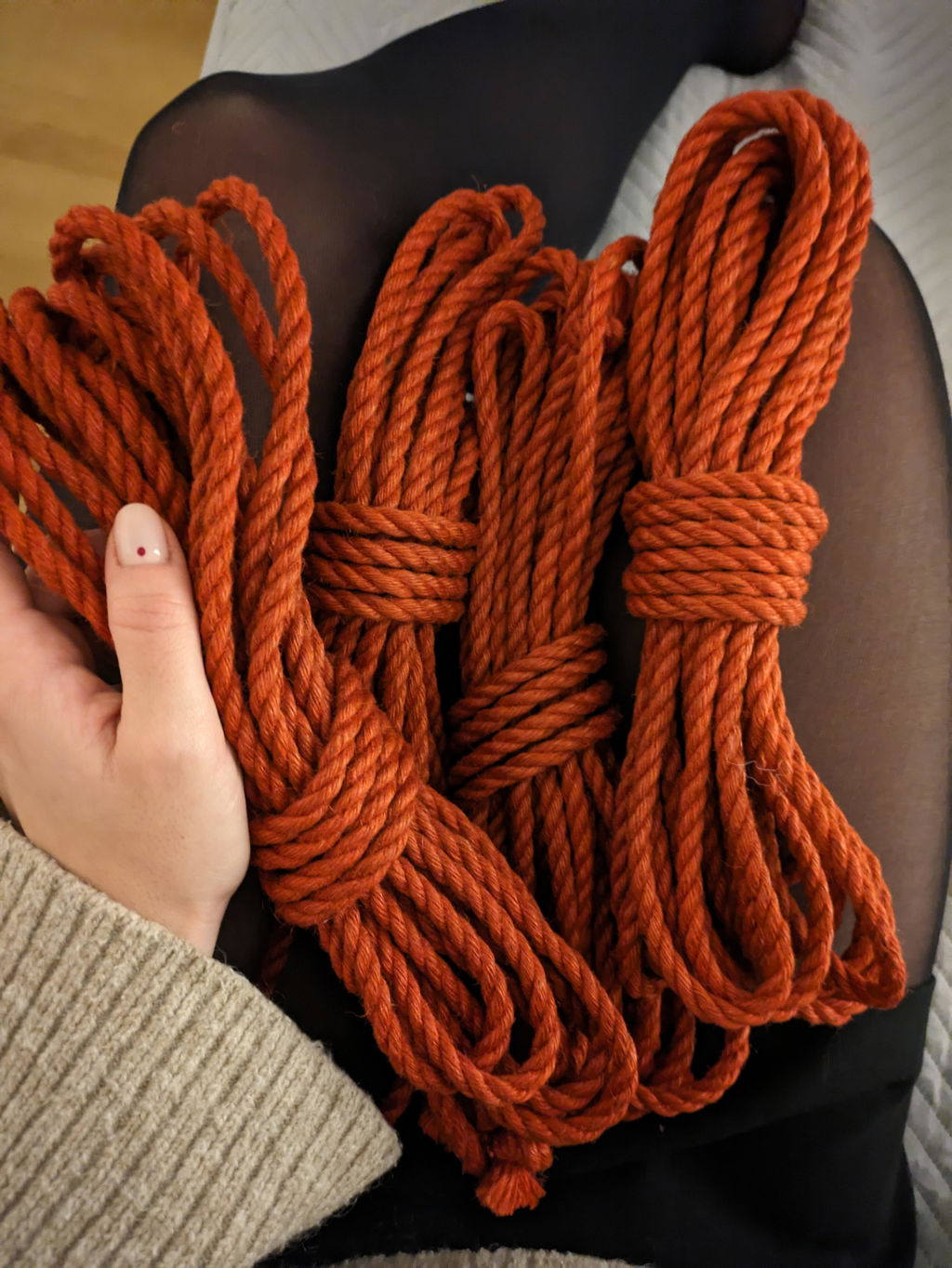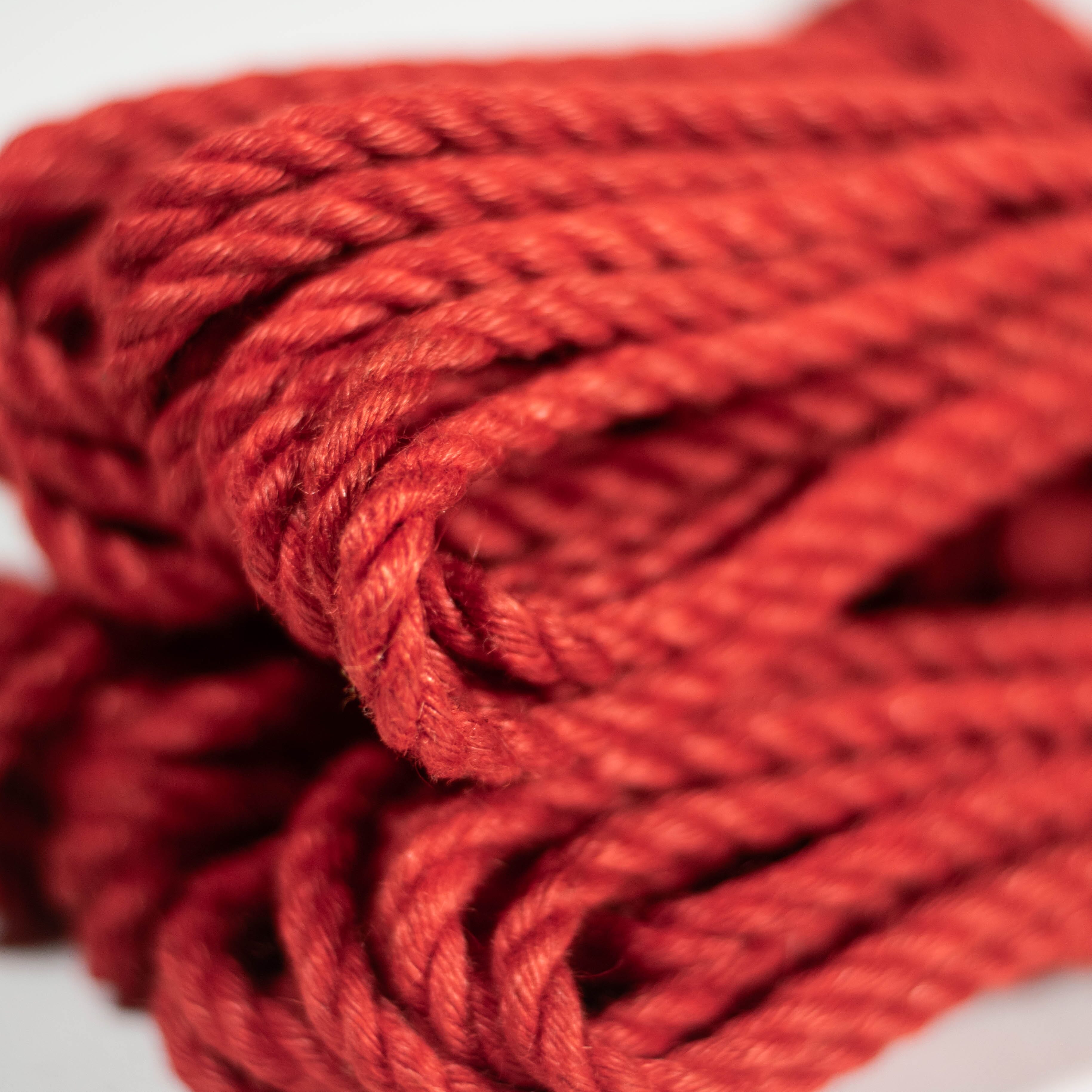
Treated Rope - 6mm Anatomie Red Jute Rope Shibari Rope

Anatomie red jute rope · 6mm single-ply (treated)

7.5m length
£21.00
Sale price  £21.00 Regular price  £0.00
Skip to product information
Treated Rope - 6mm Anatomie Red Jute Rope Shibari Rope

Anatomie red jute rope · 6mm single-ply (treated)

£21.00
Sale price  £21.00 Regular price  £0.00

Bright red single-ply jute from our own Anatomie line. Hand-treated and ready to use.

Length

Buy More, Save More

  • 4+ ropes - Save 5%
  • 8+ ropes - Save 10%
  • 12+ ropes - Save 15%

Automatic at checkout. Mix & match any ropes.

  • Free shipping on orders over £50
  • Delivery within 1–3 days
  • Plain, unbranded packaging

Key specs

Material
Jute (tossa)
Colour
Red
Treatment
Treated
Construction
Single-ply, 3 strands
Diameter
6 mm
Source
Anatomie Rope Shop
Vegan
Yes
Details

A bright red single-ply jute rope from our signature Anatomie line, hand-treated and ready to tie. Single-ply jute is lightweight and fast to tie with, and at 6mm this is the standard diameter for most shibari ties. Like our Anatomie jute ropes these red ropes have a consistent twist and with proper care can last for several years.

Shipping

We will work quickly to ship your order as soon as possible. Once your order has shipped, you will receive an email with further information. Delivery times vary depending on your location.

Care & storage

Surface fuzz is normal

New jute develops a layer of fine fuzz. Some people singe this off; you can also brush it off with a coir brush, or just allow it to shed naturally with use. It's part of the breaking-in phase every jute rope goes through and not a defect.

Keep it dry

Jute is a natural fibre and doesn't love being damp. If you can, we recommend airing your ropes out after use by hanging them. If your ropes do get wet you'll need to hang them under tension.

Re-oil when it dries out

Over time and use, jute loses some of the oils and will start to feel stiff and brittle. Re-treat the ropes with a jute-suitable oil (camellia/tsubaki oil is standard, jojoba oil is also very popular). How often you'll need to treat your ropes depends on how often you use it, whether it's used on skin or clothing and also the climate.

FAQs

Which length do I actually need?

Most people will want to purchase the 7.5 m length for shibari. We make longer lengths available to for those who prefer to cut ropes to a specific length, or sometimes because Naka-style practitioners like a single long rope in their kit.

How many ropes do I need?

Two ropes is the practical minimum. That covers single and double column ties, simple leg and chest ties, and most beginner class content.

We recommend starting with four ropes of 7.5m. With two you spend a lot of time untying one thing to tie the next, which is a slow way to learn - four lets a tie stay tied while you practise the next one.

Once you are working on the floor you will probably want around eight, which is enough to combine upper and lower body harnesses freely. A full suspension set is typically twelve lengths or more.

Will the dye transfer or fade?

Our dyed ropes are colourfast in normal use — you shouldn't see colour transferring to skin or clothing during tying. Like any dyed natural fibre, the colour will mellow gradually over years of use, friction, and sunlight, which most people find only adds character. Avoid getting dyed rope wet against light fabrics, as damp is when any natural-fibre dye is most likely to bleed.

Is this the same rope as your natural Anatomie jute, just in red?

Yes — same tossa jute, same single-ply construction, same consistent twist, and the same hand-treatment as our natural Anatomie line. Everything we say about how that rope ties, breaks in, and lasts applies here; the only difference is the dyeing.

Why does the red cost more than the natural?

Dyeing adds a production step: the fibre is coloured and then the rope still needs the same hand-finishing as the rest of our line. The small premium reflects that extra work — the rope underneath is identical.

How do I care for dyed jute? Anything different?

Care is the same as any treated jute — keep it dry, air it after use, and re-oil when it starts feeling dry (see Care & storage above). One addition: use a clear oil like camellia or jojoba sparingly and evenly, and store red ropes out of direct sunlight, which is the main thing that fades dye over time.

You may also like